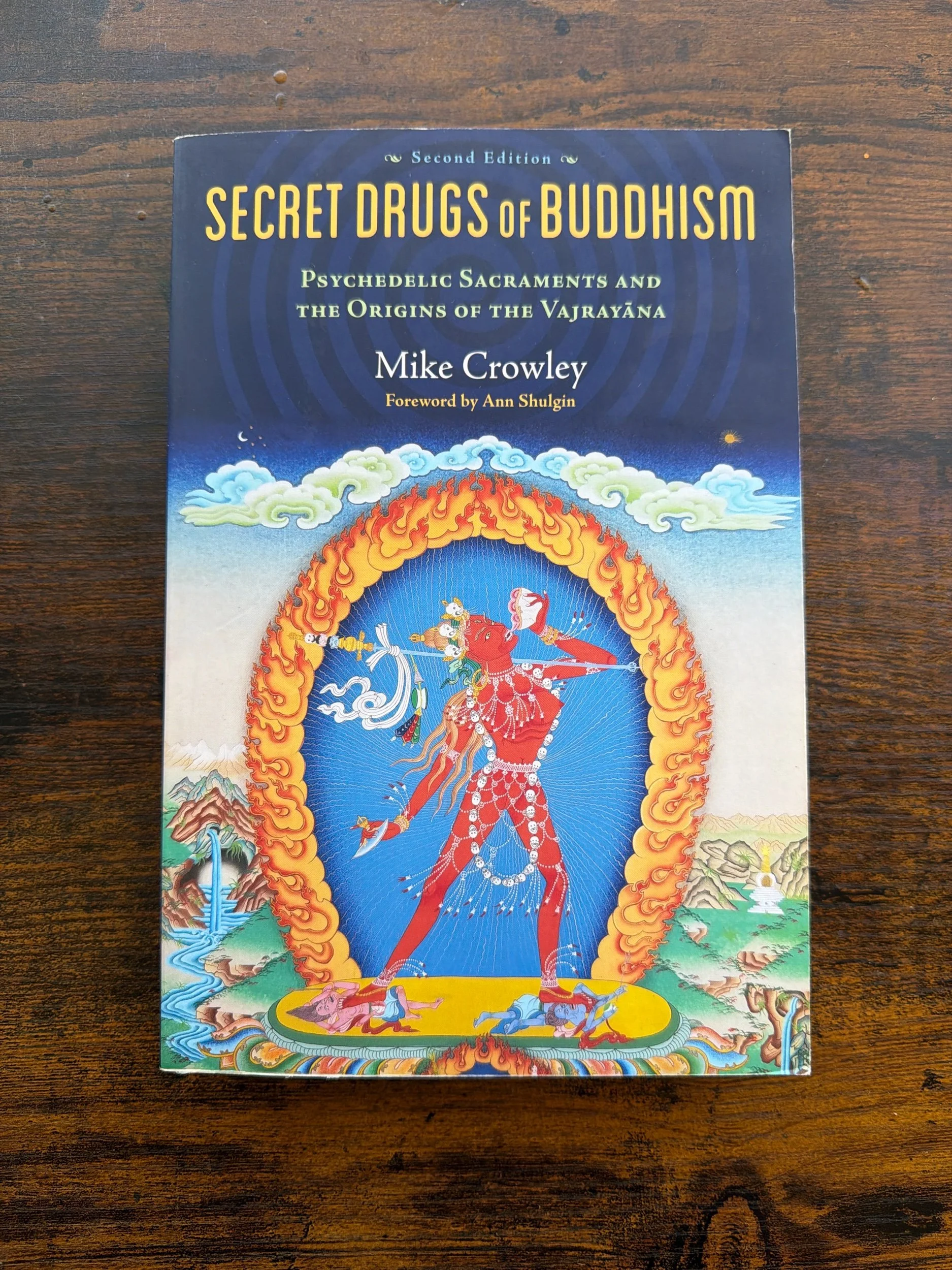
DID THE BUDDHISTS of the ancient world make use of psychoactive plant sacraments in their sacred rituals? Secret Drugs of Buddhism is the first book to explore the historical evidence for the use of entheogenic plants within the Buddhist tradi-tion. The culmination of over forty years of research, this book draws on scriptural sources, botany, pharmacology, and religious iconography, calling attention to the central role that psychedelics played in Indian religions. It traces their history from the mysterious soma potion, celebrated in the most ancient Hindu scriptures, to amrita, the sacramental drink of Vajrayãna Buddhism.
Although amrita used in modern Vajrayāna ceremonies lacks any psychoactivity, there is ample evidence that the amrita used by the earliest Vajrayãna practitioners was a potent entheogen. The sacramental use of amrita in its psychoactive form is the central topic of this book. In particular, Secret Drugs of Buddhism attempts to identify the specific ingredients employed in its earliest formulations. To this end, the book presents evidence from many countries in which the Vajrayāna movement flourished. These include Bhutan, Japan, Mongolia, and Tibet, but special attention is given to India, the land of its origin.
Some hilighting